Slots Not on GamStop: What the Money Does After You Win
 Available in GB
Slots not on GamStop sit with operators outside the British licensing system, so the scheme’s block does not reach them and UK protections do not apply. Their appeal is friction at sign-up; the real test is friction at withdrawal, and the Gambling Commission’s own figures show where the friction normally sits.

There is a moment every gambler knows, and it has nothing to do with spinning reels. It comes the morning after a decent win, when a withdrawal request that took four seconds to submit turns into a document request, a manual review, a “pending” status that resets overnight. So when the trade talks up slots not on GamStop, I look past the sign-up page. The interesting question about any slot site is not how eagerly it takes money, but how willingly it gives it back.
The scheme itself matters here. GamStop — often typed “gamestop”, which is nobody’s fault and everybody’s problem when they are searching for it — went live on 27 April 2018 and now sits behind a licence condition: since 31 March 2020, every online operator with a British licence must be part of it. GamStop held 561,983 active exclusions at the end of 2025 and reported 614,738 people on the register by July 2026. That is the wall. Slots not on GamStop are, by definition, the slots on the other side of it.
Slot Sites Not on GamStop and How They Work
Offshore operators offering slot games to British players hold licences from other jurisdictions — Curaçao, Anjouan, Kahnawà:ke, Malta’s MGA — and none of those licence regimes is wired into GamStop. The Commission is blunt that the scheme covers only the operators it licenses, which is why an exclusion registered through it simply does not reach a site with no British licence. The Commission’s Illegal Markets team issued 3,140 cease and desist and disruption notices between April 2024 and October 2025, and by July to September 2026 it was referring 1,835 websites a quarter to search engines. The segment is not a loophole in the paperwork; it is the target of an active enforcement programme.
Withdrawal Records from Licensed Operators
The honest benchmark for what a payout should look like comes from the Commission’s own data, and it is not flattering to anyone advertising “instant” withdrawals. Across June to September 2024, customers of large licensed online operators made 44.2 million withdrawals. Of those, 96.3% cleared automatically, 3.5% cleared within 24 hours and 0.1% took up to 48 hours.
Read that again with a clear head. On nearly a hundred million pounds’ worth of ordinary cash-outs, roughly one withdrawal in twenty-eight did not clear by itself. That is the *licensed* sector, where the rules forbid reverse withdrawals outright — RTS 14B, in force since 31 October 2021, states that customers must not be given the option to cancel a withdrawal request — and where the Commission says there is no valid reason to delay a payout when it has no regulatory concerns about the customer. Complaints coded “withdrawals and/or financial transactions” fell from 2,416 in the year to December 2022 to 1,791 in the year to December 2025. Better. Not fixed.
Now move offshore. None of that regime travels with the player. A Curaçao or Anjouan licence does not carry RTS 14B, does not carry licence condition 17.1.1, does not carry the fair-and-open condition 7.1.1, and does not carry the Consumer Rights Act 2015 as the Commission and the Competition and Markets Authority apply it to gambling terms. What it carries instead is a contract of adhesion written by the operator, and the operator decides when the pending button turns green.
That is the point of this page, and the reason its angle is money returning rather than free spins.
Checking the Licence Behind the Site
Cluster searches like uk slots not on GamStop usually come with a mental shortlist. My advice is to replace the shortlist with a check that takes ninety seconds, because licence claims are where this market is most confidently dishonest.
Curaçao is the useful case study, since most offshore slot sites advertise it. Under the National Ordinance on Games of Chance (LOK), which took effect on 24 December 2024, the Curaçao Gaming Authority became the direct licensing authority and the old master-licence and sub-licence model was abolished. The legacy “orange” sub-licence certificates of operation ended on 15 October 2025. Licensing ceased for the four former master licensors on 18 August 2024, 1 October 2024, 1 November 2024 and 31 January 2025. Operators holding valid licences when the LOK commenced got six-month provisional licences due to expire on 24 June 2025, extended once to 24 December 2025. And a historic /JAZ number or legacy seal must not be treated as proof of a current licence.
So an operator still displaying a 1668/JAZ badge in 2026 is showing you a document that stopped meaning what it says. The CGA issues a Certificate of Operation Seal only for an approved, registered player-facing domain, and clicking it must redirect to cert.cga.cw; if the certificate behind the seal names a different domain from the site you are on, you are looking at another operator’s paperwork. On the fee side, a Curaçao B2C licence costs a one-time EUR 4,592 application fee and EUR 47,450 a year — real money, and considerably more than the badge suggests to players who assume a licence means British-grade supervision. It means supervision by a regulator 4,500 miles away with no power over your payout.
Anjouan is cheaper and thinner. B2C issuance is EUR 17,828 one-time with the same annual renewal, and an ABC News investigation published on 31 December 2025 reported that Anjouan Licensing Services claims to have issued more than 1,300 gambling licences, with a former attorney-general of the Comoros describing the seller as “an illegal entity”. Anjouan Gaming’s own certificate framework says certificates carry a unique licence number and a QR code linking to a public register, and that certificates which cannot be verified there should not be relied upon. Use that. It is the single cheapest test available.
Comparing Offshore Licence Regimes
Compare the licence regimes that actually turn up behind offshore slot sites. The figures below are the published fees and the enforcement machinery each regime brings — not brand comparisons.

| Licence regime | Licence cost | Self-exclusion link | Payout protection for British players |
|---|---|---|---|
| Gambling Commission (GB) | Application and annual fees set by the Commission | Mandatory participation in GamStop since 31 March 2020 | RTS 14B, licence conditions 17.1.1 and 7.1.1, CMA undertakings; 96.3% of withdrawals auto-cleared (June–September 2024) |
| Curaçao (LOK, 24 December 2024) | EUR 4,592 one-time B2C application; EUR 47,450 annual | None | No GB route; legacy orange seals ended 15 October 2025 |
| Anjouan | EUR 17,828 B2C issuance and the same on renewal | None | ADR provider must be named in terms; complaints expected resolved within 30 days |
| Kahnawà:ke | CPA application rising from USD 35,000 to USD 40,000 on 1 January 2027 | Own scheme, permanent and irrevocable | Contractual terms required to be fair; full-time Dispute Resolution Officer |
| Malta (MGA) | EUR 5,000 application, EUR 25,000 annual, 5% gaming tax | None for GB | Published list of Unauthorised URLs; complaints in English or Maltese |
| Costa Rica | No licensing regime | None | None; Bill No. 25,057 rejected in early 2026 |
The column that matters is the fourth. Four of those six regimes offer a British player no route to a payout they cannot get from the operator voluntarily.
Identity Checks and the Withdrawal Pause
If there is one mechanism that decides whether money comes back, it is verification — and on offshore slot sites it is usually triggered at the worst possible moment.
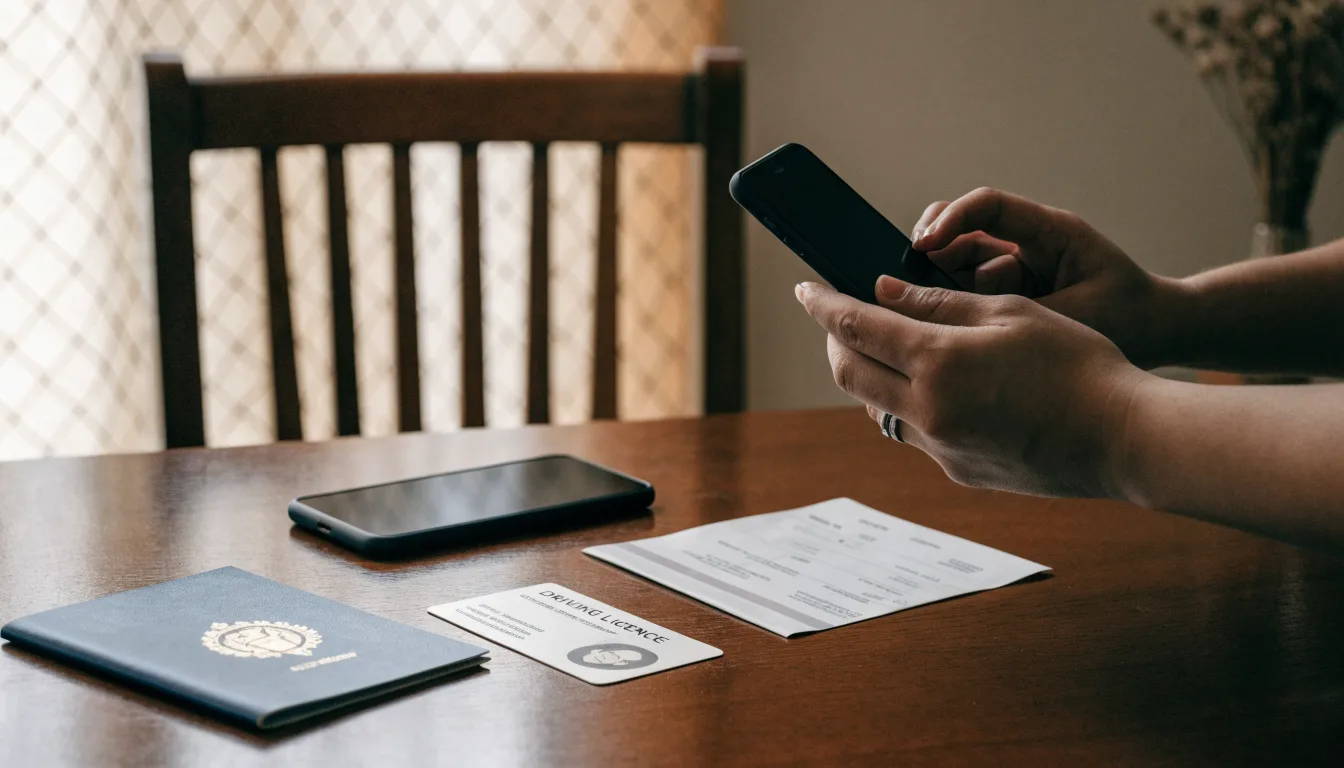
Here is how it works the first time. A licensed British operator is now expected to bring identity and age checks forward to before a customer deposits or stakes; the Commission has said plainly that onboarding on incomplete or inaccurate information — initials instead of full names, nicknames, commercial addresses — is not sufficient. Under the Money Laundering Regulations, remote casinos must identify and verify when a customer deposits or withdraws €2,000 or more, and the threshold applies both to a single transaction and to transactions that appear linked within a single logged-on period. Documents commonly sought are passports, driving licences and household bills, and much of the checking happens invisibly against credit reference and electoral roll data, which is why most players never see a document request at all.
Later, it changes shape. Verification is ongoing, not a one-off: it can be refreshed when circumstances or details change, and where an operator runs a shared wallet across products, the casino requirements bite when the customer first enters the casino section and deposits. The Commission’s own blog of 12 August 2026 reported that over a quarter of complaints reaching its Contact Centre concern identity verification, and it flagged concern about operators using “fuzzy matching” through third-party providers to onboard customers on partial or equivocal verification. There is a specific harm in that: onboarding someone under a middle name where a forename was used creates mismatches with records held elsewhere, including GamStop’s, which quietly undermines the whole scheme.
The warning signs on an offshore site are consistent. A term permitting only one withdrawal request at a time. Manual review applied to every fifth or tenth withdrawal. A document request that arrives only after a win and never before a deposit. A maximum cashout clause measured as a percentage of a bonus. A sole-discretion clause letting the operator void winnings. The Commission fined one operator £170,000 in July 2025 for a bonus term stating the operator could close accounts or forfeit winnings at its own discretion, and in October 2026 another agreed a £900,000 settlement for, among other things, unnecessarily delaying consumer withdrawals and imposing a one-withdrawal-at-a-time term found unfair under the Consumer Rights Act 2015. Both of those were licensed operators. Offshore, where no such action is available, the same clause simply stands until the player gives up.
Five Signs a Slot Site Will Actually Pay Out
Some of these need a licence register; the rest need nothing but patience and an unhurried read of the terms page.
The licence is current and verifiable, not a legacy seal
Check the seal by clicking it and confirming it resolves to the regulator’s own verification domain, and that the certificate names the same domain you are on. On Curaçao, anything showing an orange sub-licence or a /JAZ number is showing a document that ended on 15 October 2025. On Anjouan, use the QR code against the public register. If neither works, stop.
The withdrawal term carries no cap and no filter
Look for a maximum cashout expressed as a percentage of a bonus, a one-withdrawal-at-a-time rule, or a scheduled manual review of every nth request. UK guidance prohibits any maximum limit on withdrawals from a deposit balance and treats sole-discretion clawback terms as unfair; offshore terms face no such constraint.
Identity checking is disclosed before the first deposit
The Commission expects customers to be told before depositing what documents may be needed, in what circumstances and in what form. A site that says nothing about verification until a win is pending has told you when it intends to use it.
Complaints route to a named, independent ADR provider
Anjouan requires licensees to designate an approved ADR provider — currently EGIS ADR, Axion ADR, iGaming ADR and others — and to publish its contact details. A named provider with published turnaround is a real deterrent; “contact our support team” is not.
The bonus conditions are readable in one click
LCCP provision 5.1.9 requires significant conditions to be prominent and, where displayed online, in full no further than one click away. If the terms of a “no deposit” offer take three pages to reach the first restriction, the restriction is the product.
A Practical Check Before Any Deposit
Five or six ordinary checks, in the order that saves the most time.
- Verify the licence on the regulator’s own register. Open the register in a separate tab and confirm the domain name matches the site. Reason: a licence claim is the easiest thing to fake and the only claim that underpins every other promise.
- Read the withdrawal section of the terms before the bonus section. Search the page for “withdrawal”, “pending” and “maximum”. Reason: payout mechanics decide whether a win is real, and bonuses are designed to be read; withdrawal terms are designed not to be.
- Check whether identity documents are described up front. Look for a stated document policy in the help centre. Reason: a site that discloses verification early has nothing to gain from springing it later.
- Find the named ADR provider and its time limits. Confirm it appears on the regulator’s approved list and note its submission deadline, which can be as little as twelve months from the operator’s final response. Reason: unclaimed disputes expire.
- Set a deposit limit and decline nothing. From 31 October 2025 British licensees must prompt customers to set a financial limit before a first deposit and present that as the default; offshore, the equivalent control sits in the account settings if it exists at all. Reason: the limit that exists before the first spin is the one that survives the fifth.
- Keep the exclusion decision separate from the site decision. Self-exclusion through GamStop Online blocks online gambling with British-licensed operators for six months, one year, five years or five years with auto-renewal, takes a few minutes to set up and up to 24 hours to take effect, cannot be cancelled during the term, and stays in place afterwards until the person contacts GamStop to remove it. If auto-renewal is chosen, it can only be switched off in the final six months of a five-year period and otherwise continues for up to four further five-year terms. Reason: it works — over half a million people are on the register — but only where it reaches, and it does not reach offshore.
That last point is not a technicality. It is the entire reason this cluster exists as a search category.
What Slots Not on GamStop Means for the Money
The two clusters of phrases do not describe two markets so much as two different contracts, and the difference is not the reels. A British-licensed site is a regulated counterparty: RTS 14B, licence condition 17.1.1, condition 7.1.1, the CMA undertakings, an approved ADR provider and a complaints framework that only recently brought withdrawal complaints down to 1,791 a year. An offshore slot site is a commercial counterparty in a jurisdiction that sells licences at prices ranging from EUR 4,592 to USD 40,000 and largely leaves the payer to work it out for itself. Same game, different contract.
There is no security in pretending otherwise. The Commission’s January 2025 warning notice said unlicensed sites available to British consumers often target people who have self-excluded through GamStop and may have inadequate social responsibility and anti-money-laundering controls — and it named operators appearing there. The share of people engaged with illegal gambling in a four-week window is small: 0.6% across the whole population, and 2.5% among those who gambled online in the past four weeks. But H2 Gambling Capital estimates the amount staked with illegal operators in the UK reached £16.6 billion in 2025, up from about £5 billion in 2019. The category is not marginal. It just is not safe in the way a British licence makes a site safe.
Questions About Slots Not on GamStop
What slot sites are not on GamStop?
Any operator without a Gambling Commission licence is outside the scheme, because participation is a condition of that licence alone. In practice these are sites licensed in Curaçao, Anjouan, Kahnawà:ke or by Malta’s MGA, plus a tail of operations with no meaningful licence at all. The Commission’s Illegal Markets dashboard recorded 586 illegal gambling websites accessible to British consumers in September 2026, so the pool is neither small nor stable — domains move constantly.
How fast do offshore slot sites pay out?
Faster than licensed sites on paper, unpredictably in practice. The licensed benchmark is high already: of 44.2 million withdrawals by customers of large operators between June and September 2024, 96.3% cleared automatically. Offshore, speed depends on the operator’s own queue, its verification appetite and its payment rails, and there is no rule banning a pending period or a one-withdrawal-at-a-time term. What you gain is not measured speed; it is a shorter document queue at sign-up.
Do PayPal slots not on GamStop exist?
Rarely, and that is a licence problem rather than a payment problem. Licence condition 5.1.2, effective 31 January 2024, requires British licensees to accept payment only through providers regulated under the Payment Services Regulations 2017. Payment providers build their own risk rules on top, and an unlicensed operator’s merchant category is not a comfortable one. Where an offshore site advertises a mainstream e-wallet, check whether the cashier actually offers it to British accounts before planning around it — Pay by mobile and pay by phone bill are usually the honest options, and they are usually the most expensive.
Can you get a no deposit bonus on slots not on GamStop?
You can be offered one, but the terms are where it turns. UK rules banned mixed-product promotions from 19 January 2026 and capped wagering requirements on bonus funds at ten times, after the Commission found some licensees applying up to 60 times. Offshore multipliers typically run higher, and no-deposit offers commonly pair a 40x to 60x requirement with a cashout cap of well under £100. A no-deposit bonus with a €50 cap and a 50x requirement is not a gift; it is a demonstration of the withdrawal terms.
What is the best slots not on GamStop site?
There is no honest answer to that in the abstract, because “best” would have to mean best at returning money, and no offshore register publishes payout data comparable to the Commission’s. What can be compared is the contract: whether the licence verifies, whether the withdrawal term carries a cap or a review filter, whether identity documents are disclosed before the first deposit, and whether a named ADR provider has published time limits. Those four checks separate the plausible from the hopeless far better than any ranking.
Are slots and casinos not on GamStop legal in the UK?
The position is asymmetric and worth stating precisely. The criminal offence in section 33 of the Gambling Act 2005 attaches to the person providing facilities for gambling without an operating licence — it is the operator, not the adult customer, who commits it. But the protection is one-sided too: British self-exclusion, ADR access and fair-terms rules apply only to licensed operators. If something goes wrong with an offshore slot site, the Commission cannot help, because it is a regulator and not an ombudsman. Help is at the National Gambling Helpline on 0808 8020 133, free and open 24 hours a day, every day of the year.
The Last Thing to Check Is the Door on the Way Out
Every conversation about slots not on GamStop eventually reaches the same place, and it is not the bonus. It is the exit: whether the operator returns money without argument, and whether the player can leave cleanly. One figure settles the mood better than any slogan — of the 44.2 million withdrawals made by customers of large licensed operators between June and September 2024, 99.9% cleared within 48 hours, and the offshore sites that dominate this search category are under no obligation to match it, or to explain why they did not. If that ever stops being acceptable, the National Gambling Helpline is free on 0808 8020 133, 24 hours a day, every day of the year — and a GamStop exclusion, once set, holds for its full term and stays in place until the person contacts GamStop to remove it.
Games and Slots – Same Day Payout
Content created by the «Same Day Payout» team